
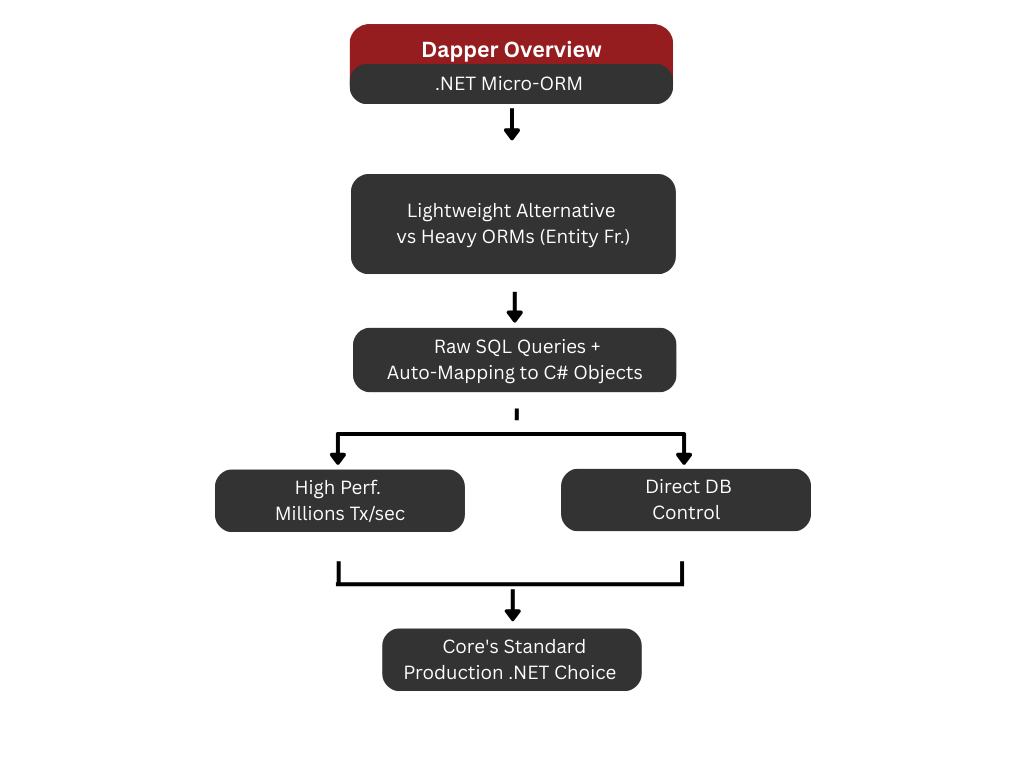
Dapper is a light and high performance micro-ORM (Object Relation Mapper) in the .NET technology. Created by the folks at Stack Overflow it sought to provide an easy to use, lightweight access to data in .NET projects without the overhead of a fully featured ORM such as Entity Framework.
Dapper is less an attempt to abstract SQL out of existence, instead it is quite happy to use SQL. It aids you in entering unprocessed queries and that it takes care of mapping results into your C# objects. This is why Dapper is a very popular option among developers that need to have a more direct control of how they interact with a database, yet still enjoy cleaner code that is less repetitive.
Core uses Dapper on all our .NET projects and it has proven to be able to handle millions of transaction without breaking a sweat.
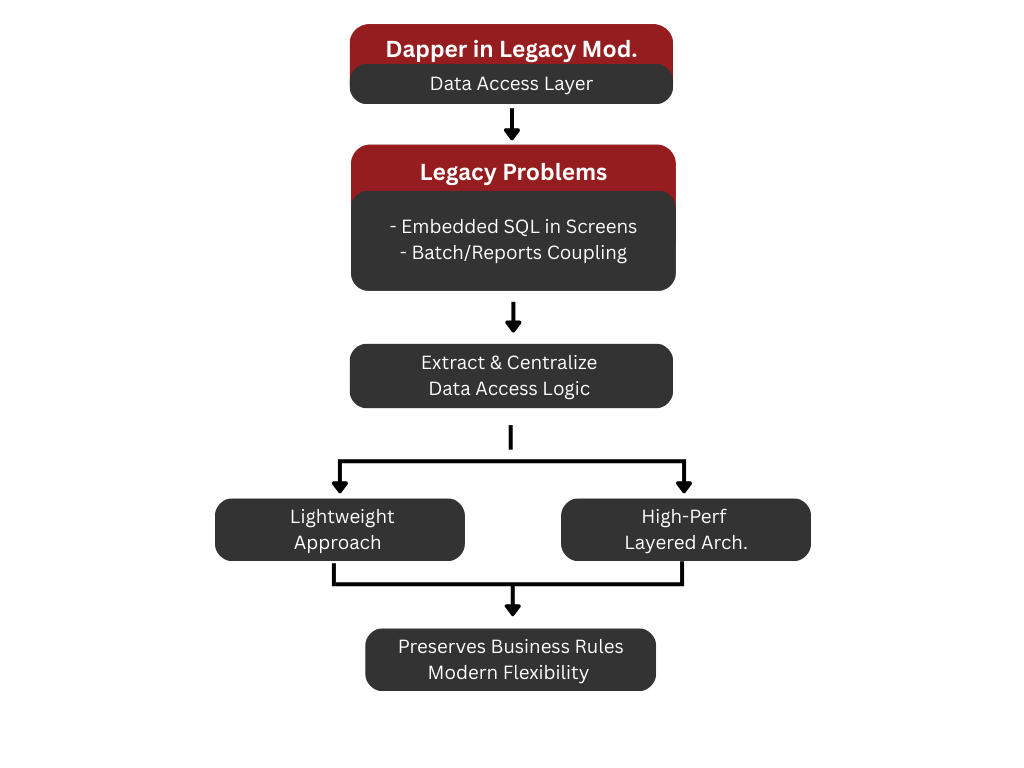
In legacy application modernization projects, data access is one of the most critical architectural concerns. Older systems commonly embed SQL logic directly into screens, batch programs, and reports, resulting in tightly coupled code, duplicated access logic, and limited flexibility. A core objective of modernization is to extract and centralize this data access logic into a dedicated Data Access Layer while preserving existing business rules and application behavior. Dapper is frequently selected for this purpose because it provides a lightweight, high-performance approach to relational data access that aligns naturally with modern layered architectures.
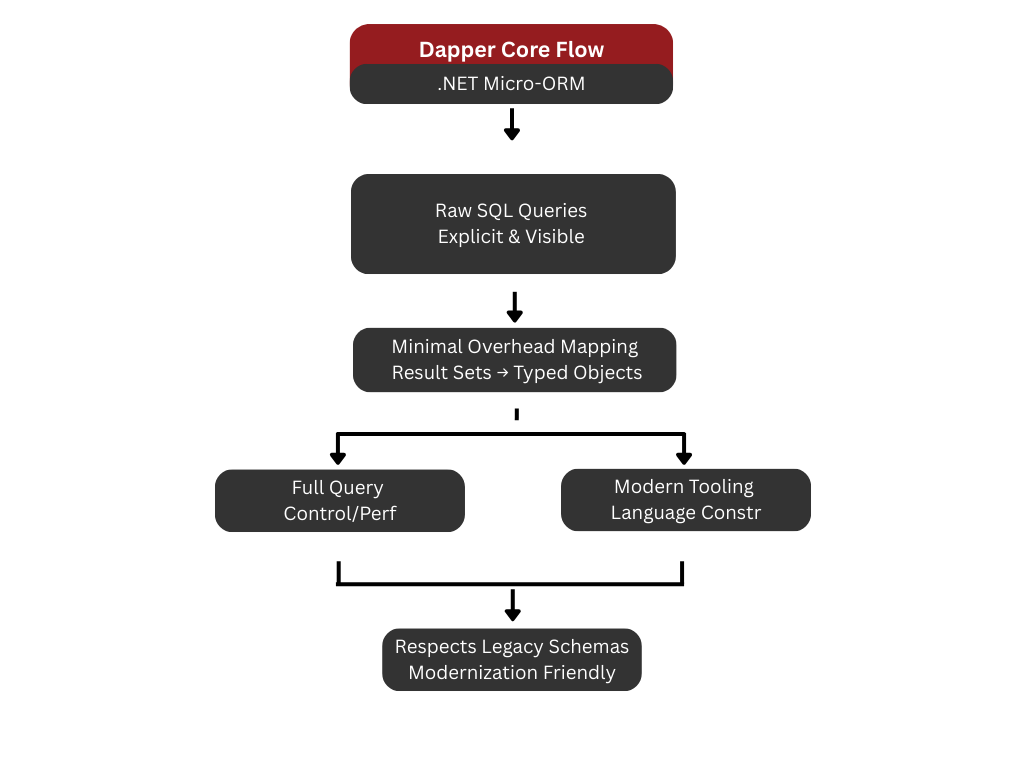
Dapper is a lightweight Object Relational Mapper for .NET that executes raw SQL and maps result sets directly to strongly typed objects with minimal overhead. Unlike heavyweight ORMs that abstract SQL away from developers, Dapper keeps SQL explicit and visible, which is especially important in modernization projects where existing database schemas and access patterns must be respected. This approach allows teams to retain full control over query behavior, performance, and optimization while benefiting from modern language constructs and tooling.
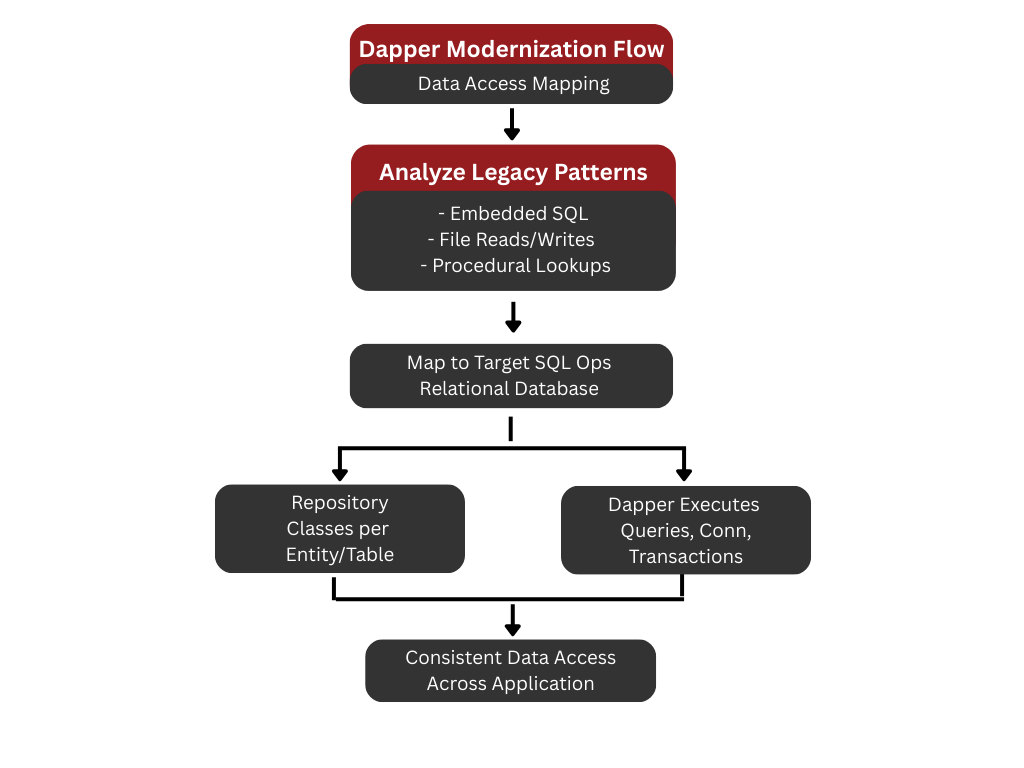
During the discovery and analysis phases of a modernization initiative, legacy data access patterns are carefully reviewed, including embedded SQL, file-based reads and writes, procedural lookup logic, and dictionary-driven access paths. These patterns are mapped to equivalent SQL operations in the target relational database. In the modernized solution, each database table or logical entity is represented by a dedicated data access or repository class that encapsulates all SQL related to that entity. Dapper is used within these classes to execute queries, manage connections and transactions, and map results to application objects, ensuring that all application components access data in a consistent and controlled manner.
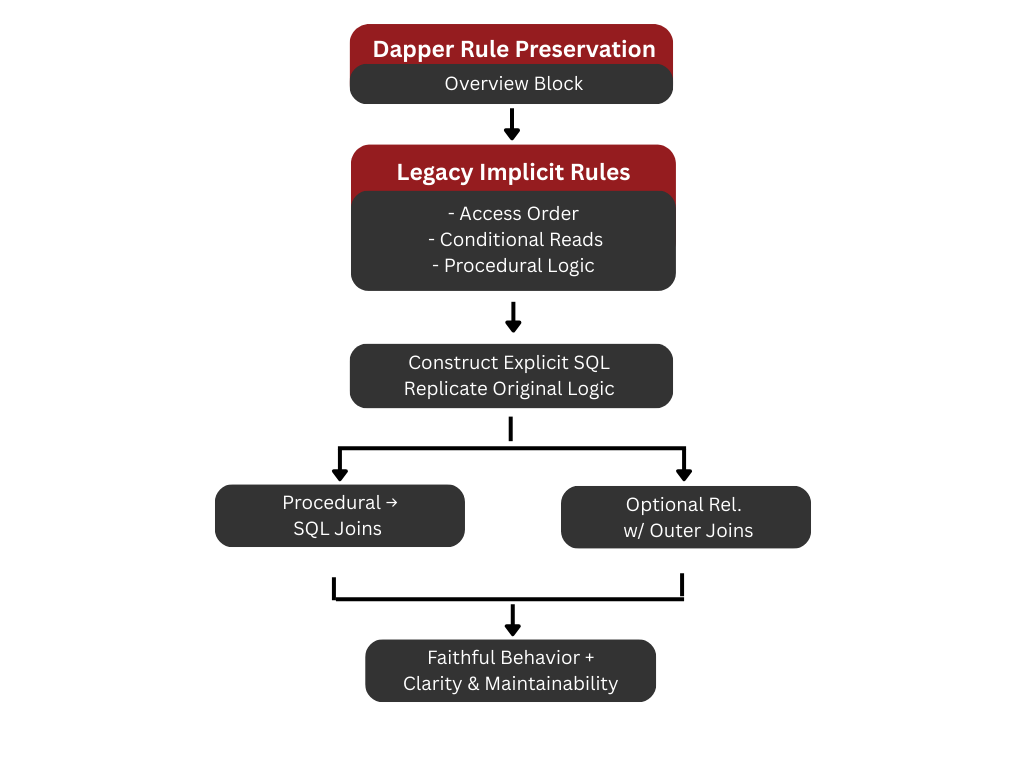
Preserving legacy business rules is a key requirement in any modernization effort. Many legacy systems rely on implicit rules enforced through access order, conditional reads, and procedural logic embedded within programs. When migrating to Dapper, these behaviors are preserved by carefully constructing SQL queries that replicate original access logic, replacing procedural joins with explicit SQL joins, and implementing optional relationships using outer joins where required. By keeping SQL logic explicit, Dapper enables modernization teams to faithfully reproduce legacy behavior while improving clarity, maintainability, and documentation.
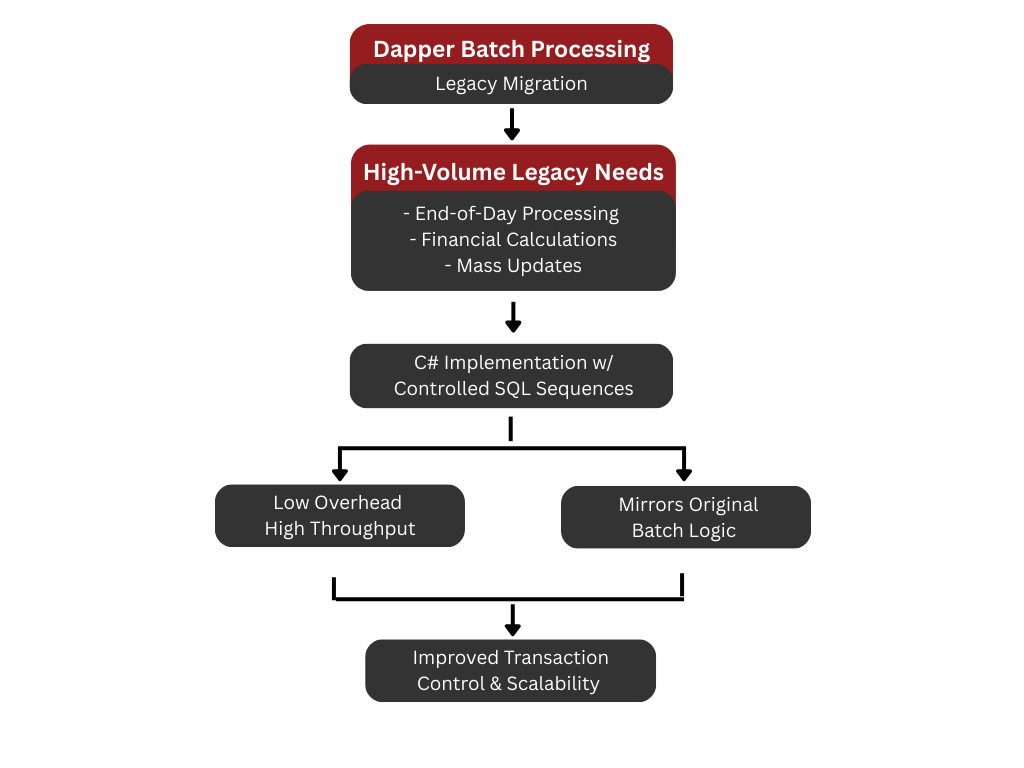
Dapper is well suited for high-volume and batch-oriented processing, which is common in legacy applications. End-of-day processing, financial calculations, mass updates, and data transformations can be implemented efficiently using Dapper due to its low overhead and close-to-native database performance. Batch programs migrated to C# typically use Dapper to execute controlled sequences of SQL operations that mirror the original batch logic while improving throughput, transaction control, and scalability.
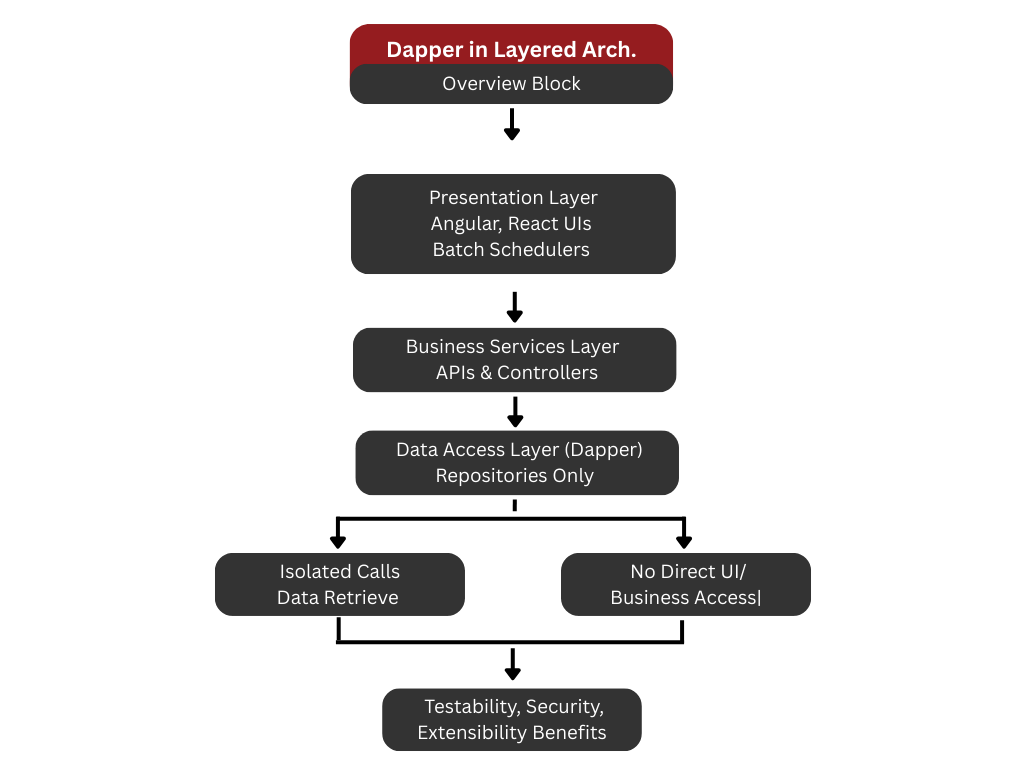
Within a modern layered architecture, Dapper operates strictly within the Data Access Layer and is isolated from presentation frameworks such as Angular or React and from business logic components such as APIs and batch controllers. User interfaces and batch schedulers interact with business services, which in turn call Dapper-based repositories to retrieve or update data. This clear separation of concerns improves testability, security, and long-term extensibility while reducing the risk of unintended side effects when changes are introduced.
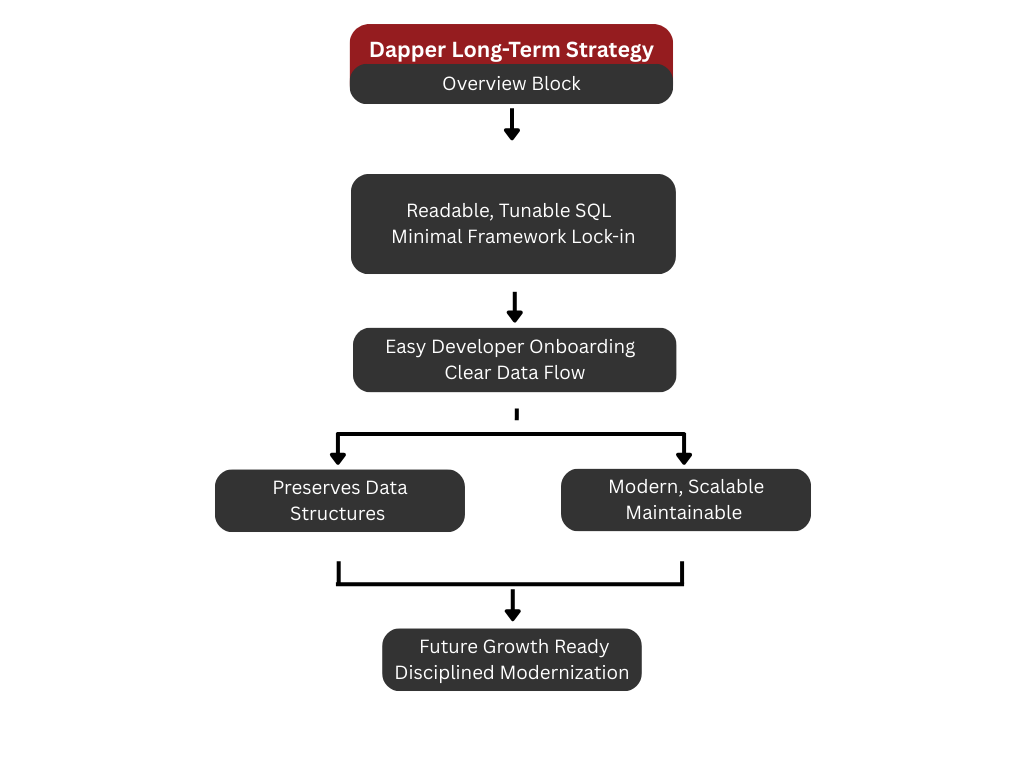
Over the long term, a Dapper-based data access strategy significantly improves maintainability compared to legacy systems. SQL remains readable and easy to tune, framework lock-in is minimized, and new developers can quickly understand how data flows through the application. By combining Dapper with a disciplined modernization approach, organizations are able to preserve existing data structures and business logic while delivering modern, scalable, and maintainable applications that are well positioned for future growth.